
If you are buying a home, you will hear the words earnest money and escrow almost immediately. Your agent mentions them. The paperwork mentions them. Everyone seems to assume you already know what they mean. Most buyers do not. And that is completely normal.
The home-buying process comes with enough decisions already, from choosing the right neighborhood to figuring out what you can comfortably afford. Add unfamiliar terms into the mix, and it is easy to feel overwhelmed before you even get to the good part. The truth is, earnest money and escrow are not nearly as complicated as they sound. They are simply part of the system that helps protect both buyers and sellers while a home is being sold. Once you understand how they work and why they matter, everything else starts to feel a little clearer and a lot less intimidating.
This guide breaks it all down in simple language, so you can move forward with confidence and focus on what really matters: finding the right home.
What Buyers Should Know About Earnest Money
Earnest money is your way of showing the seller that you are serious about buying their home. When you submit an offer, this deposit tells the seller you are acting in good faith and not just testing the waters. Think of it as a promise backed by money. You are saying that you intend to move forward with the purchase as long as the agreed conditions are met.
Earnest money is usually between one and three percent of the purchase price. The exact amount depends on your local market and how competitive things are. In a hot market, sellers may expect a higher deposit. In slower markets, they may accept less.
One important thing to know is that earnest money is not an extra cost. If the deal closes, this money is typically applied toward your down payment or closing costs.
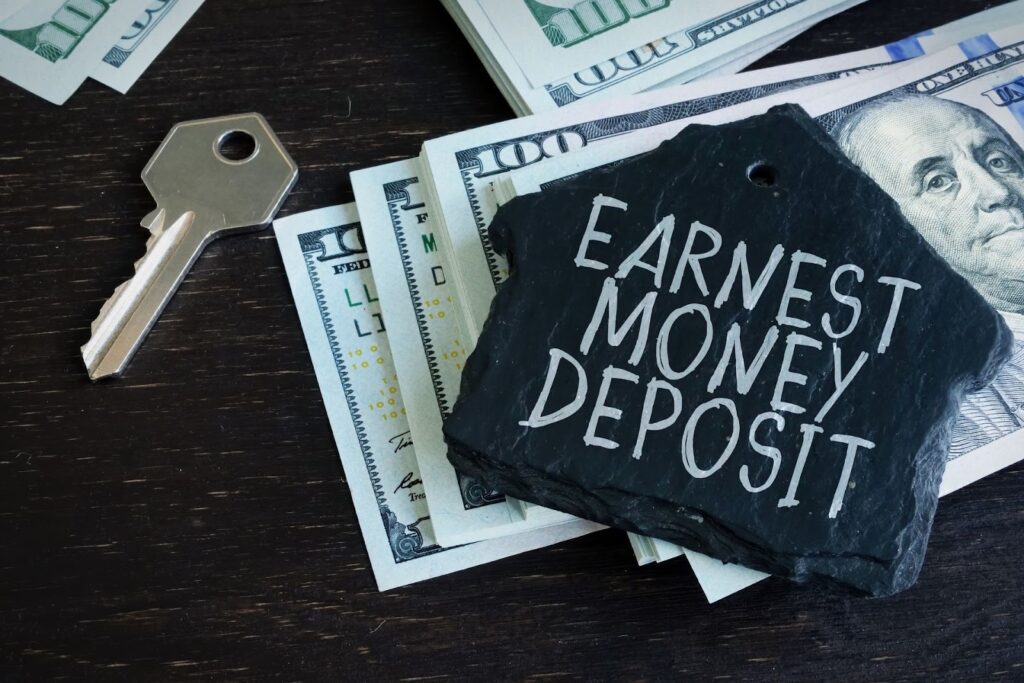
Where does Earnest Money Go?
Your earnest money is not handed directly to the seller. Instead, it is placed into escrow, a neutral account designed to keep everything fair and secure while the sale is underway. Escrow is handled by a third party whose job is to hold onto money and important documents until every part of the agreement has been completed.
This protects both sides of the transaction. The buyer does not release funds too early, and the seller does not transfer ownership before all conditions have been met. After your offer is accepted, you will typically have a short window of time to submit your earnest money deposit. Once that deposit is received, escrow officially opens, and the home-buying process moves forward.
From that point on, escrow becomes the central hub for the transaction, coordinating the exchange of funds and paperwork as inspections, appraisals, and financing are completed. Nothing is finalized until everything checks out, giving everyone involved a clear and structured path to closing.
What Escrow Does During the Buying Process?
Escrow acts as the coordinator and safeguard for the entire transaction. While you may not see much happening on the surface, a lot is taking place behind the scenes.
During escrow, inspections are completed, the home is appraised, your lender finalizes the loan, and the title company checks that the property has a clear title. Any repairs or credits are negotiated and final paperwork is prepared for closing.
Escrow makes sure that all money and documents are handled correctly and that nothing is released too early. When every requirement has been satisfied, escrow closes and ownership officially transfers to you. That is the moment you get the keys.

Can You Get Your Earnest Money Back?
It depends. Earnest money is usually refundable if you cancel the contract for a reason allowed in the agreement and within the required timeframes. If you miss deadlines or walk away without a valid reason, you could lose it.
- Contingencies
In most cases, yes. Purchase contracts usually include contingencies. These are conditions that must be met for the sale to continue. Common contingencies include home inspections, financing approval, and appraisal results. If a problem comes up and you cancel the contract within the allowed timeframes, your earnest money is typically refunded. This is why paying attention to deadlines is so important.
- Contract Risks
If you walk away without a valid reason or miss important deadlines, the seller may have the right to keep your earnest money. This does not happen often, but it is possible, especially in competitive markets.
Expand Your Real Estate Knowledge With Something Different Real Estate
If you want to learn more about real estate and go beyond the basics, check out the courses offered by Something Different Real Estate. They are created to help you understand how real estate really works, without the confusion or overwhelm. Our goal is to make buying and selling easier by providing smart guidance that helps people feel confident and informed at every step.
Contact us and gain insights from real estate professionals who help you understand your options and choose what is right for you.
Key Takeaways for Home Buyers
Earnest money and escrow can sound intimidating, but they exist to protect you.
Earnest money shows that you are committed to the purchase. Escrow ensures that everyone involved follows the rules and that your money is handled safely. As long as you understand your contract and stay aware of key deadlines, these tools work in your favor.
Once you understand how they fit together, the home-buying process feels a lot less overwhelming and a lot more exciting.
⏩Also Read: First Time Home Buyer Guide: What You Need to Know
Frequently Asked Questions
- How long does an escrow usually last?
Escrow typically lasts between thirty and sixty days, though this can vary. The timeline depends on factors like your loan type, location, and how quickly inspections and financing move forward. - Is escrow during the home purchase the same as the escrow in your mortgage payment?
No. Purchase escrow is temporary and manages the home sale. Mortgage escrow comes after closing and is used to collect money for taxes and homeowner’s insurance. - What happens to the earnest money deposit if the seller stops the sale?
If the seller stops the sale for a reason that is not allowed under the contract, the earnest money is typically returned to the buyer. Since the buyer did not cause the deal to fall apart, the seller usually has no claim to that deposit. - Is Earnest money always required?
Not always. An earnest money deposit is common, but it is not legally required in every transaction. Some sellers may accept an offer without it, though including earnest money often makes an offer stronger and more appealing.